Visual
Archive
The source from which everything begins — the painted world of Nino Devdariani.
No archive can fully contain it. This is an entrance.
The Visual Archive begins with eight works selected by the artist as key entries into her practice.
Each work stands alone, yet together they reveal the recurring logic of Nino Devdariani’s world: layered figures, theatrical compositions, textile memory, cultural fragments, historical echoes, humor, excess, and private mythology.
The archive is designed to be entered slowly — first through image, then through detail, and finally through the stories hidden inside the painted surface.
Catalogue Plates
Eight works selected as entries into Nino Devdariani's visual world — not a complete catalogue, but a living index of recurring figures, symbols, memories, materials, and states of mind.
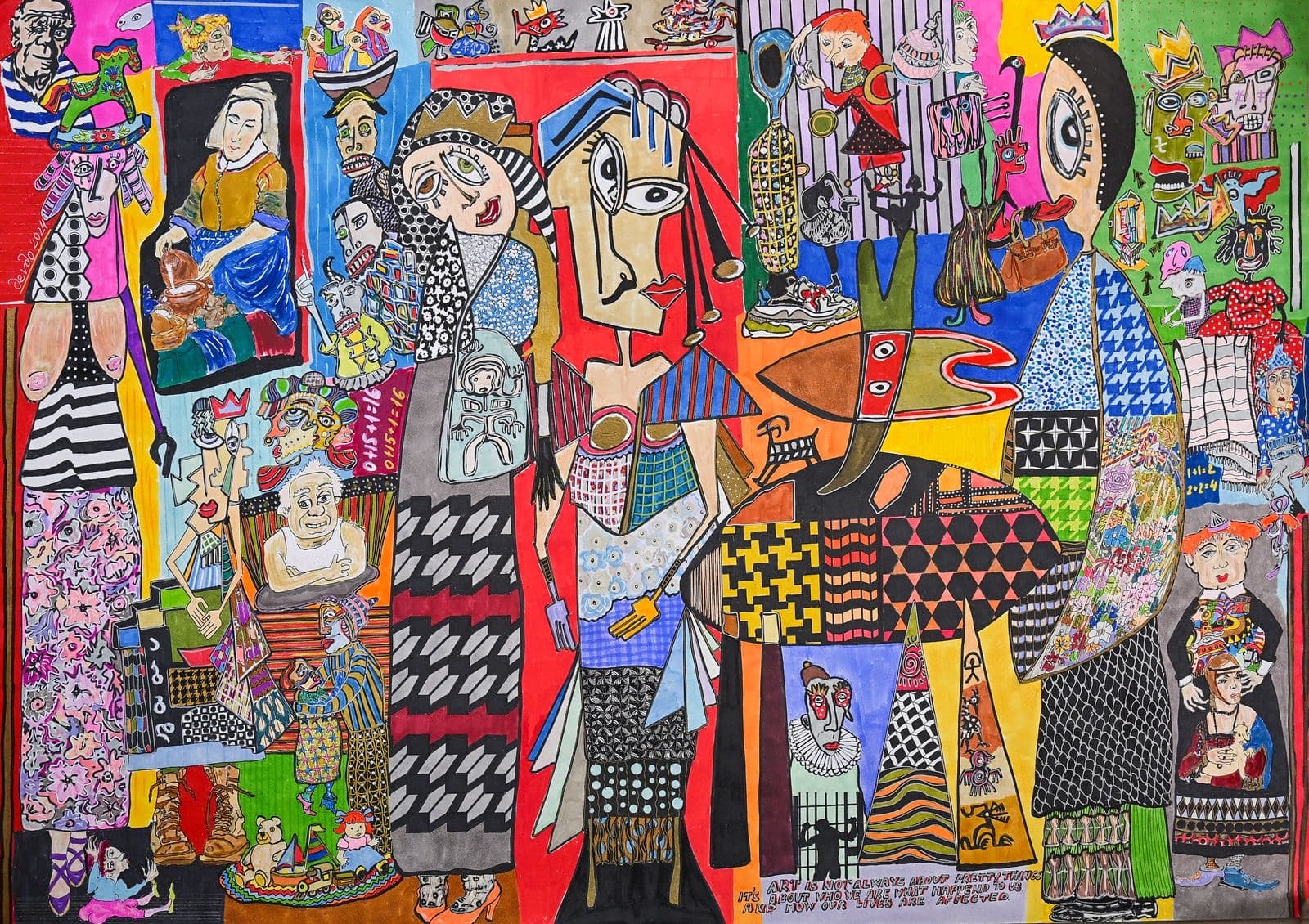
A B C D
A childhood world of color, first signs, and the alphabet of entering life.
A B C D opens the archive with the logic of beginnings. The painting imagines childhood as a bright, crowded, unstable world where everything is being learned for the first time: signs, bodies, gestures, rules, mistakes, beauty, fear, and play. The alphabet becomes more than letters; it becomes the first structure through which life is entered step by step.
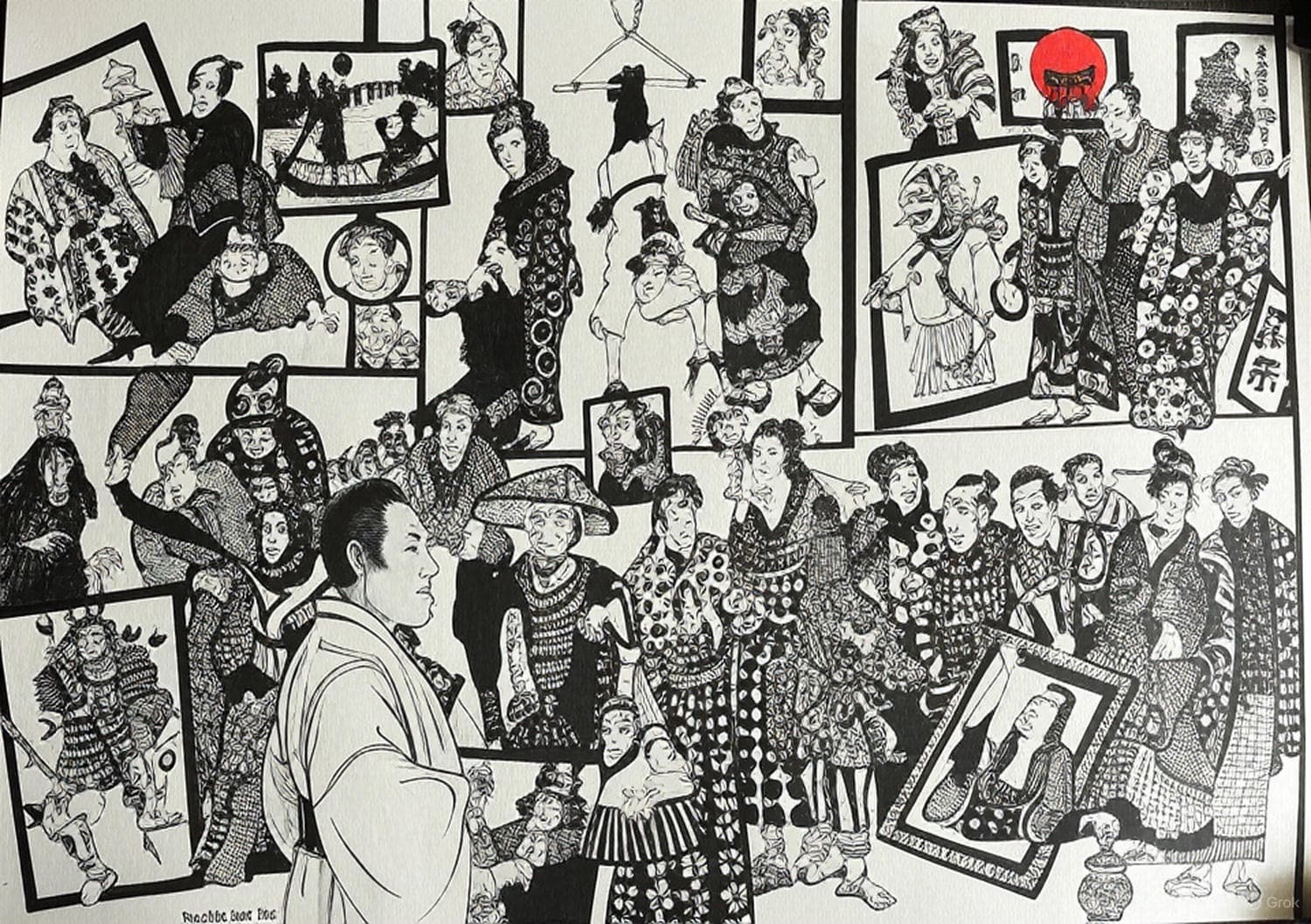
Exhibition
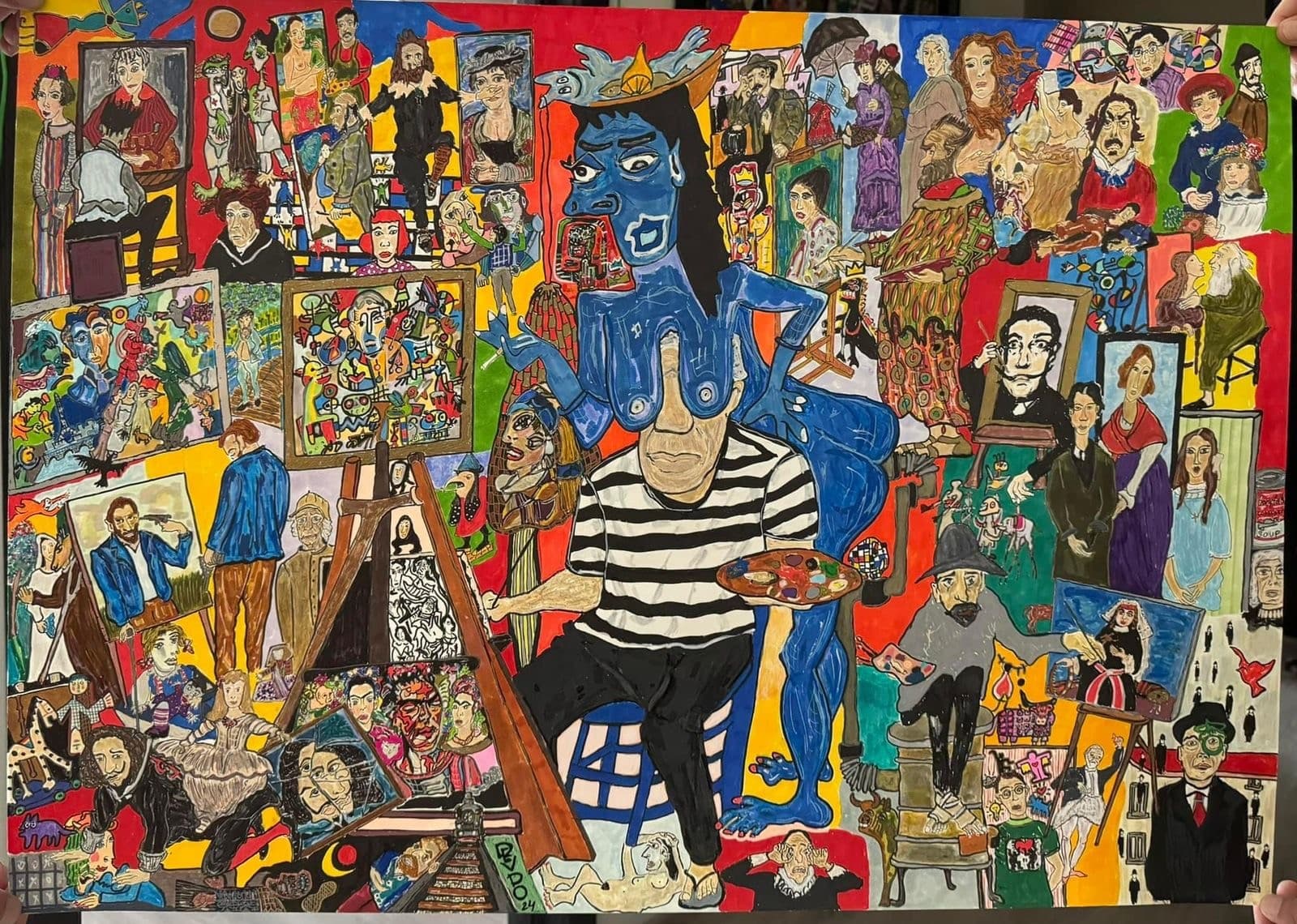
A strange procession of figures preparing paintings for a great exhibition.
Exhibition turns the act of showing art into theatre. Figures prepare for a large exhibition, carrying works toward their destination while the boundary between painting, frame, and character begins to collapse. Some images appear to step out of their frames; others trap their figures inside them. The result is an exhibition before the exhibition — a world where artworks are already alive before they reach the wall.
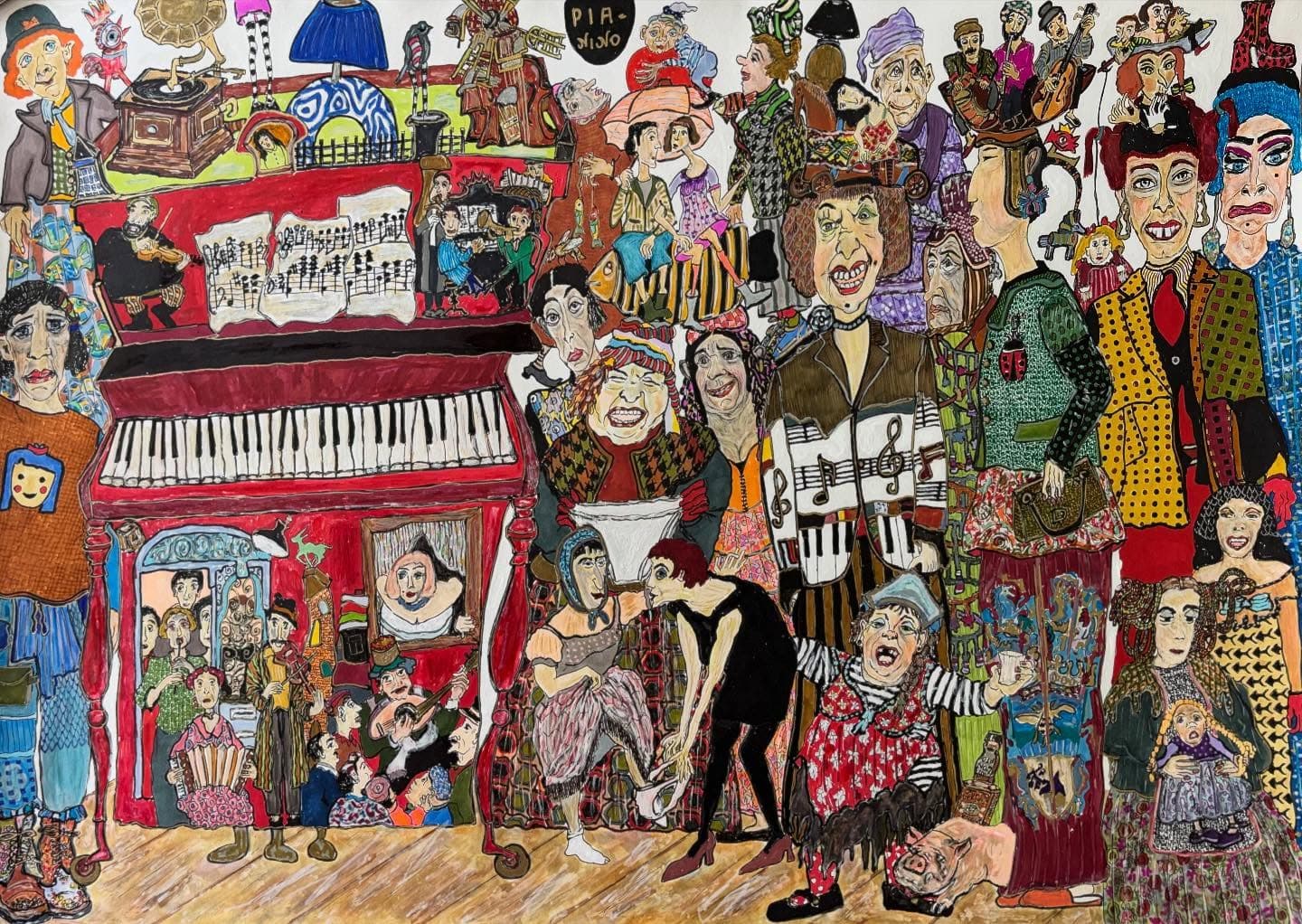
Pia-Nino
A painted society gathered around music, taste, noise, and the fragile idea of quality.
Pia-Nino is a work about listening. Around the piano gathers a mixed society: some figures belong to the world of quality, taste, and attention, while others bring noise, excess, and instability. The artist places herself within this listening society without turning the painting into a literal self-portrait. The piano notes refer to the Georgian song "Tbiliso," making music a carrier of place, memory, and belonging.
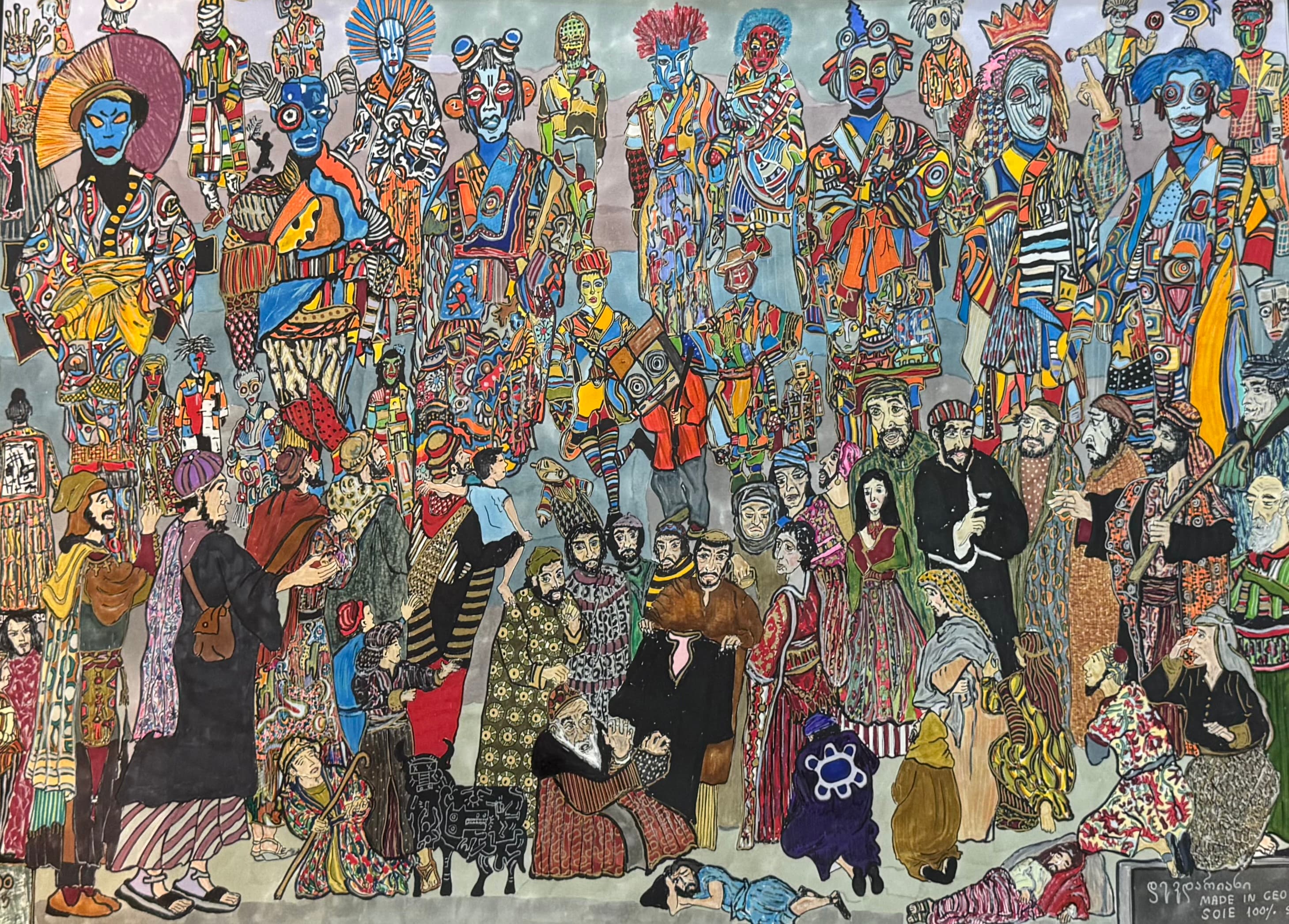
AI stages a collision between an ancient society and the arrival of a new civilizational force. Below, a community from an older, almost biblical world looks upward; above them, something new descends — technological, distant, powerful, and difficult to name. The painting does not treat artificial intelligence as a clean futuristic symbol. Instead, it turns AI into an event witnessed by people who belong to another order of time.
Someone Else in Eyes
A painting about identity watched, borrowed, reflected, and interrupted by another presence.
Someone Else in Eyes turns identity into a crowded and unstable field. The figures do not simply look outward; they seem to contain other gazes inside themselves. Faces, costumes, animals, staged bodies, and visual fragments create a world where the self no longer belongs entirely to the person who carries it. The painting asks what happens when another presence enters the eye — and begins to look back from within.
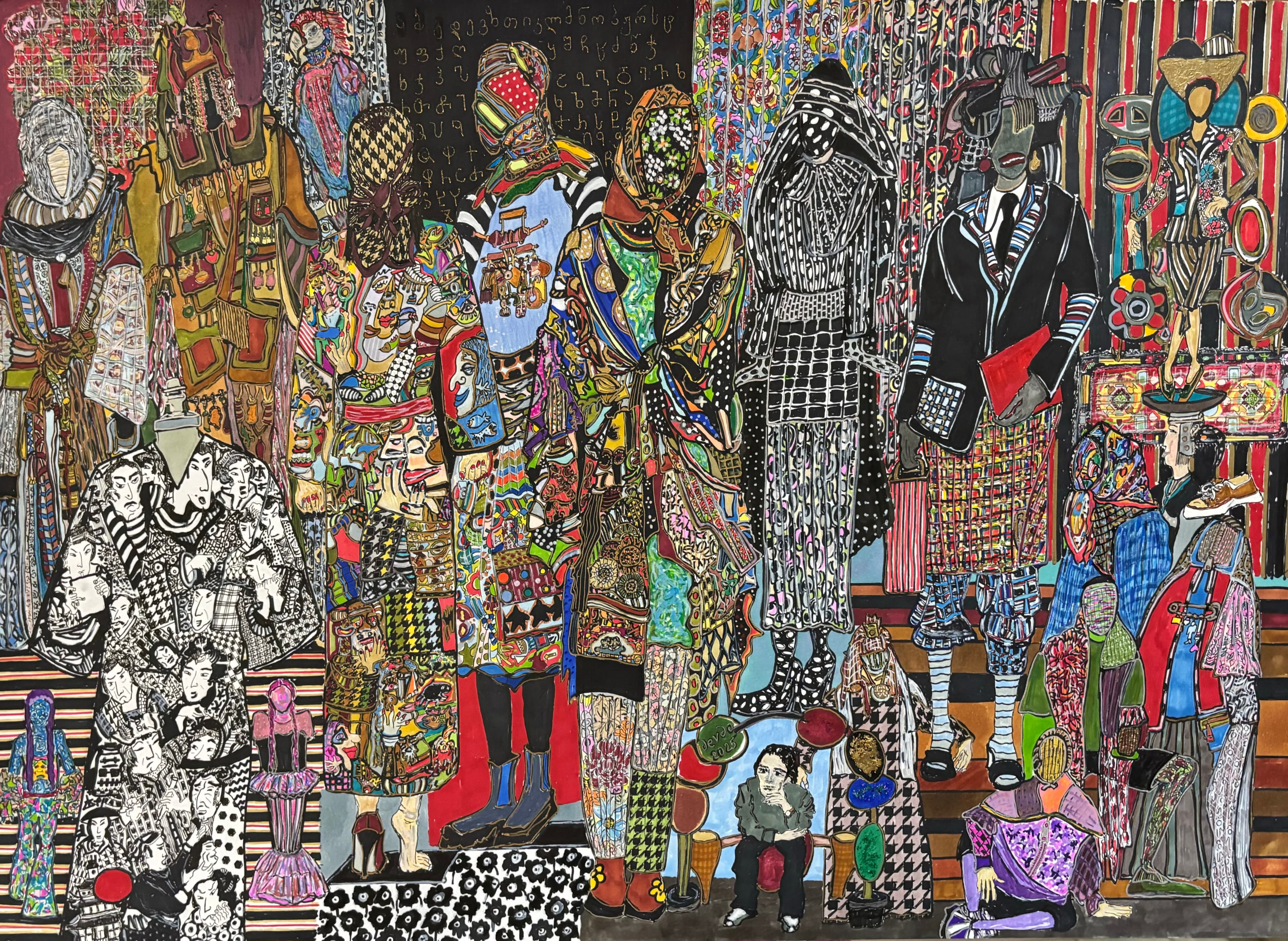
Textile is the clearest bridge between the Visual Archive and the Wearable Archive. Here, paintings have already left the wall and moved onto clothing. The models are faceless, which shifts attention away from individual portraiture and toward surface, fabric, body, and transformation. The work does not simply decorate garments; it imagines clothing as a carrier of painted worlds.
Fishes
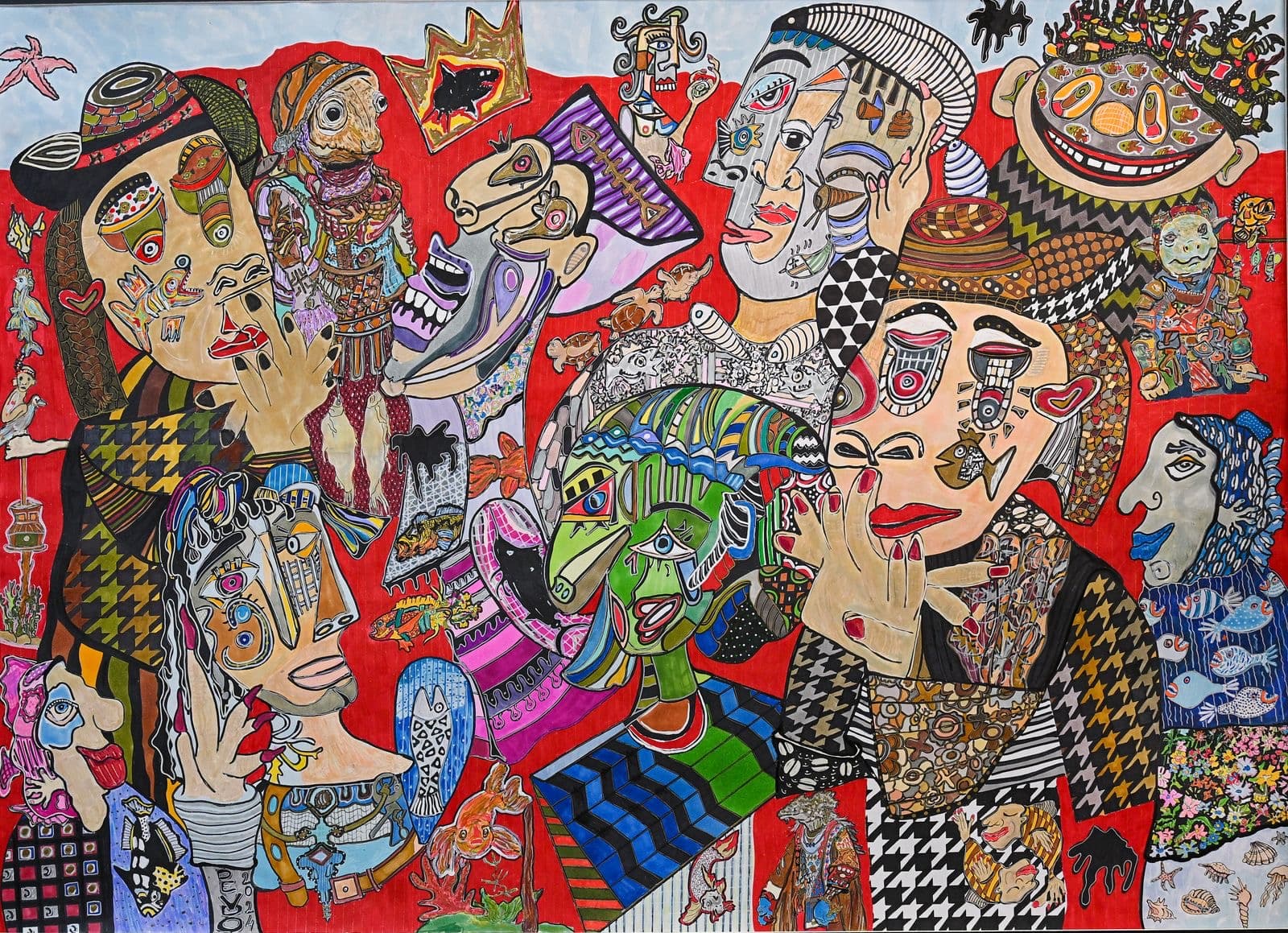
A world of beings able to live anywhere, adapt to everything, and survive across incompatible conditions.
Fishes is a painting about adaptation. Its figures seem able to survive in more than one world — on land, in water, inside costume, inside pattern, inside social pressure. The work treats adaptability not only as strength, but also as a strange condition of modern life: the ability to live anywhere may also mean the need to belong nowhere completely.
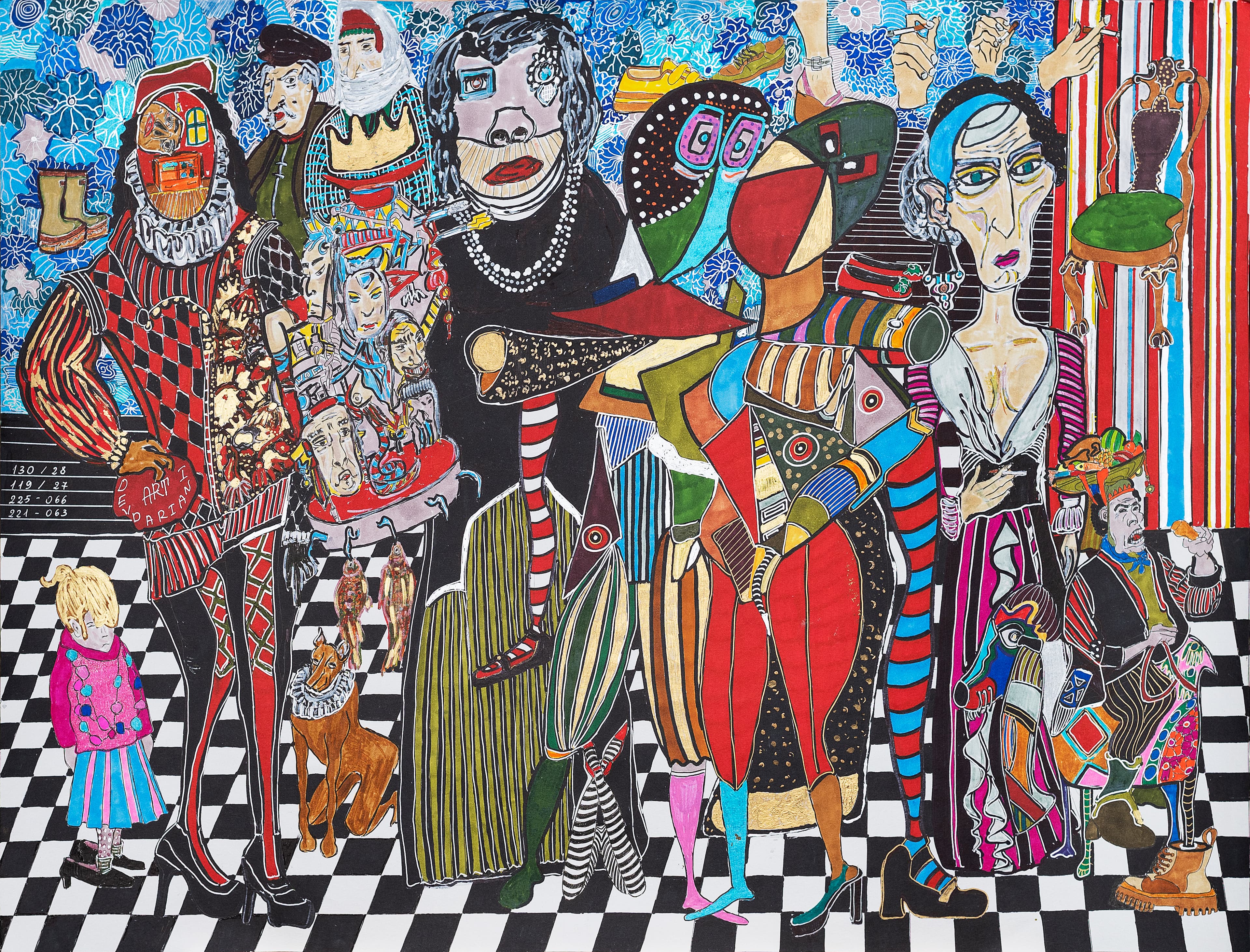
Dementia imagines a mind in which familiar structures begin to dissolve and reassemble into a new private order. The painting should not be read simply as tragedy or as comfort. It enters a more delicate space: the unsettling formation of an inner world where memory, recognition, fear, tenderness, confusion, and invented coherence may exist together.
Paintings that leave the wall.
Some works remain on the wall. Others begin to move.
This short archive film imagines the moment when a painted world crosses into fabric, body, gesture, and return.
and sometimes return.
From Visual Archive
to Wearable Archive
Some fragments leave the painted surface.
Selected details from Nino Devdariani’s works may be translated into limited silk editions — not as reproductions, but as wearable fragments of a larger visual archive.

Private Viewings & Inquiries
For original works, archive access, collaborations, commissions, and collector inquiries, contact the studio directly.